Will Bringing the Gondosóra Programme Under State Control Really Improve the Service?

Post Date: 2026. 10. 28
Will Bringing the Gondosóra Programme Under State Control Really Improve the Service?
A Professional Perspective on the Restructuring of the Gondosóra Programme, the Role of Professional Remote Monitoring, and Hungarian Technological Alternatives
An article published by Telex on 27 October 2026, entitled “Gondosóra to Be Transferred from 4iG to the Ministry, with Plans to Operate It on Half the Budget Next Year”, raises important questions about the future of the Gondosóra programme.

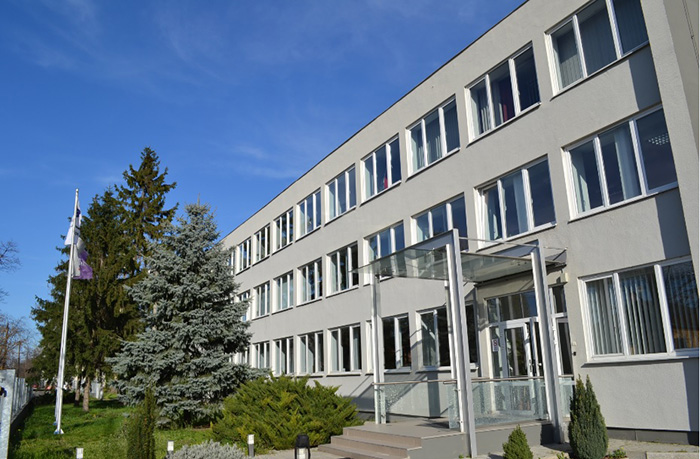
Photo source: https://jhs.gondosora.hu/
The government is planning to reorganise the programme's operations under state control and significantly reduce its costs. The intention is understandable: a nationwide social care service must operate transparently, cost-effectively, and in a financially sustainable manner over the long term.
The question, however, is whether state-led development and operation, in themselves, guarantee a better, safer, and more efficient service.
Based on more than twenty years of experience in developing and providing remote monitoring services, I believe this question cannot automatically be answered in the affirmative.
State Control and Professional Operation Are Not the Same Thing
I consider the Gondosóra programme an excellent social policy initiative, for which it is entirely reasonable that strategic management, financing, and oversight should be the responsibility of the state.
The state has a responsibility to ensure that the service is accessible, safe, and sustainable for everyone eligible to use it.
However, this does not mean that every technological development and operational task must be carried out by state institutions themselves.
Remote monitoring for elderly care is a complex service area in which information technology, telecommunications, social care, healthcare, security technology, and monitoring centre operations are closely interconnected.
Successfully operating such a system requires more than simply owning the software and devices.
It requires qualified professionals, established operational procedures, continuous system monitoring, a professional monitoring centre, and incident management protocols tested in real-life situations.
Source code can be transferred. The twenty years of professional experience behind it, however, cannot be replicated overnight.
Remote Monitoring Is Not Merely an IT Service
When an elderly person presses an emergency call button, it is not simply an IT alert that is received.
The monitoring centre operator must interpret the situation, assess the risks, and, where necessary, contact relatives, caregivers, or the appropriate emergency response organisations.
Making quick and correct decisions requires not only technology but also experience and appropriate service protocols.
The quality of a professional remote monitoring system is therefore determined not solely by its devices and servers, but also by how it handles real-life incidents.
Over the past two decades, practical feedback from more than 80 remote monitoring service providers has contributed to the development of MOHAnet's technological solutions.
These experiences have generated a body of professional expertise that cannot be acquired simply by taking over an IT system.
We Are Familiar with the Technology Currently Used by Gondosóra
MOHAnet Mobilsystems Zrt. and its subsidiary, Országos Távfelügyelet Kft., have their own proprietary devices, software, server infrastructure, and a 24/7 monitoring centre.
Our system is built, among other components, on the Helios alarm receiving platform, the MonitoringBook incident and customer management system, and the Toolbox device management solution.
We are also thoroughly familiar with the Eview EV-07B device used in the Gondosóra programme. We have direct contact with the manufacturer, have distributed this device model both in Hungary and abroad, and understand its communication protocols, configuration, and operation.
Our own infrastructure is capable of supporting such devices, although any custom firmware or system integration would, of course, require a separate technical assessment.
I consider it important to emphasise this because the secure takeover or transformation of a nationwide system cannot be based on assumptions.
Technological compatibility, operational processes, and operational risks must be verified in every case.
What Is Needed Is Not an Immediate System Replacement, but Safe and Continuous Operation
In my view, when restructuring a nationwide service of this scale, introducing new technology should not be the first priority.
The primary objective must be to ensure continuity of service.
Any potential change of operator should therefore begin with an independent professional audit.
This should cover an assessment of the system architecture, IT security, documentation and access rights, operational processes, as well as human resource and incident management risks.
Only after such an assessment can responsible decisions be made about which system components can be retained and which require further development or replacement.
MOHAnet has previously offered the relevant government officials its participation in such a professional audit, free of charge, as a contribution in the public interest.
Technological Transition Is One of the Keys to Modernisation
When planning the future of Gondosóra, long-term technological sustainability must also be examined.
One important aspect of this is the gradual replacement of 2G-based communications with LTE/4G technology.
MOHAnet's proprietary next-generation emergency call devices are already based on an LTE/4G platform.
During their development, we paid particular attention to the usage habits of elderly people, ease of use, Hungarian-language voice guidance, remote device management capabilities, and continuous device status monitoring.
Further opportunities for modernisation include diversification of SIM card service providers, integration of next-generation devices, and the gradual introduction of repairable and recyclable devices.
However, from a professional standpoint, I consider such changes justified only through a carefully controlled transition that preserves continuity of service.
Halving Costs Is Not the Same as Doubling Efficiency
According to the Telex article, the Gondosóra programme's planned budget of HUF 26.8 billion for 2026 would be reduced to HUF 13 billion in 2027.
Naturally, I support the responsible use of public funds. The cost-effectiveness of operating a nationwide service must be continuously assessed.
However, cost reduction alone does not demonstrate an improvement in efficiency.
The effectiveness of the service should be evaluated using measurable indicators such as system availability, emergency call answering times, appropriate incident handling, the effectiveness of response measures, user satisfaction, and total lifecycle operating costs.
The question is not merely how much it costs to operate the system, but also what level of service we receive for that money, at what level of risk, and with what degree of long-term sustainability.
A transparent, objective professional and economic analysis would therefore be needed to compare state-operated and privately operated models.
The State Should Be an Effective Commissioner and a Strict Regulator
In my opinion, the most important question concerning the future of the Gondosóra programme is not whether the technology is operated by a state-owned or privately owned organisation.
What matters far more is who can demonstrably perform the task safely, cost-effectively, and to the required professional standard.
The state should define service requirements, provide funding, monitor performance, and ensure that the system's operation does not become excessively dependent on any single provider.
At the same time, it may be worthwhile to give Hungarian technology companies with proven professional track records the opportunity to participate in development and operational activities.
It is not necessarily the case that a single provider should perform every task. Properly regulated, monitored, and competition-based cooperation could enable the effective utilisation of different areas of expertise.
Any shortcomings in a previous outsourcing arrangement do not necessarily mean that all responsibilities must be taken over by state institutions. Rather, they mean that the next operating model must be built on stronger professional and economic foundations.
Hungarian Expertise Can Be Part of the Solution
MOHAnet has been developing and operating personal emergency alert systems for more than twenty years.
We develop our technology based on real-world user experience, have institutional references both in Hungary and internationally, and our own infrastructure is currently in active operation.
We do not claim that our solution is the only one suitable for the future operation of the Gondosóra programme.
What I do firmly maintain, from a professional standpoint, is that the technological and operational expertise available in Hungary deserves to be examined, compared, and taken into account during the decision-making process.
At MOHAnet, we remain ready to present our solutions, participate in professional consultations, and, if necessary, contribute to the safe continuation of the system's operation and its gradual modernisation.
The measure of success for the Gondosóra programme should not be who owns the software or who operates the servers, but whether elderly people receive timely and appropriate assistance under all circumstances.
This is the objective to which every technological, economic, and organisational decision must be subordinate.
Zoltán Havasi
Chief Executive Officer
MOHAnet Mobilsystems Zrt.
Related article: Telex – Restructuring of the Gondosóra Programme, 27 October 2026
Meet us personally
Are you interested in how we can increase your safety and competitiveness with our unique developments?
Enter your contact details and our colleague will contact you in a short time to arrange a personal meeting to assess your needs - and offer a unique solution.